LuxIceland puffin mascotLuxIceland
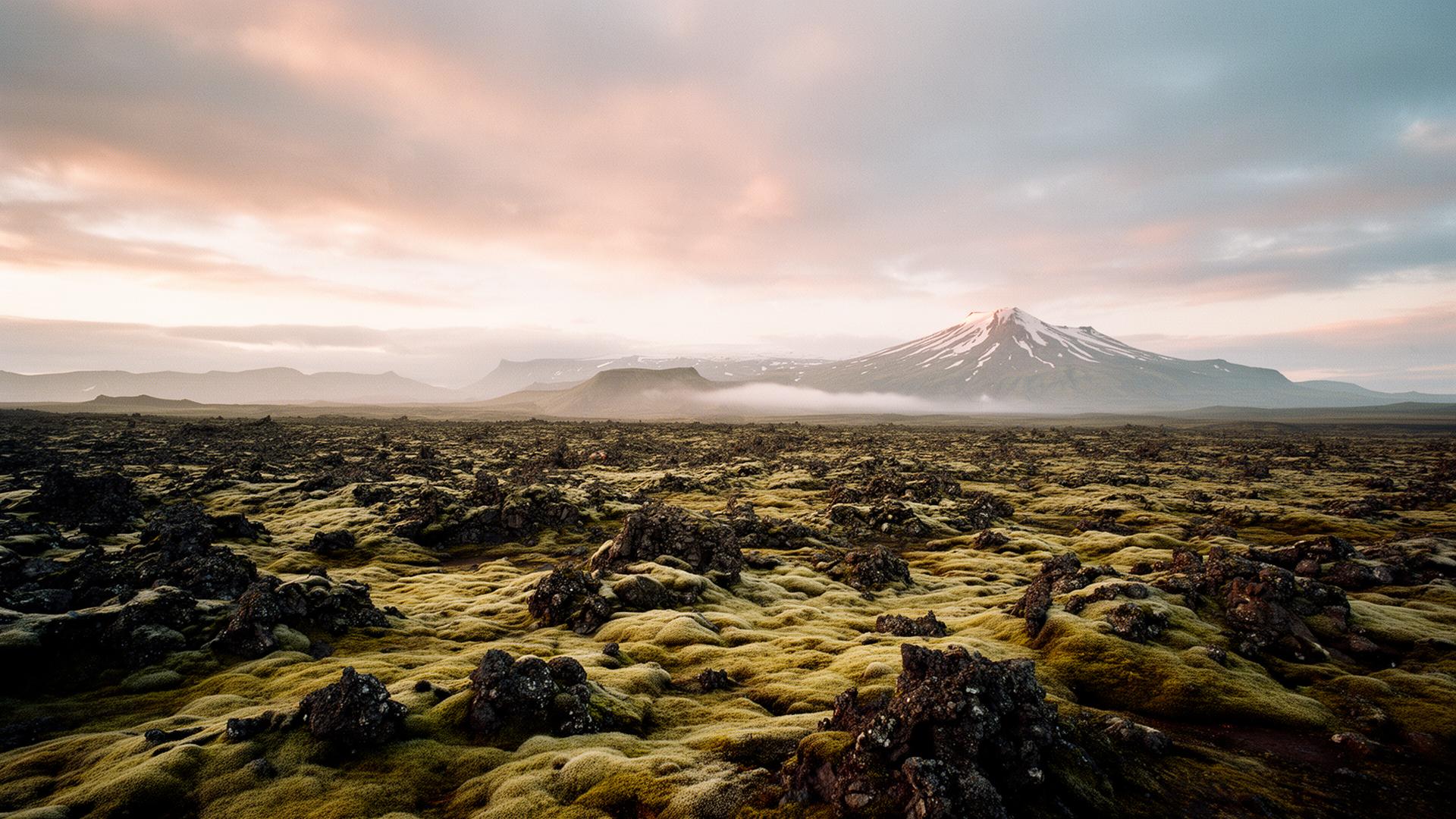
Moss-covered Icelandic lava field with a distant snow-capped volcano at golden hour
A field guide·Issue 01

Iceland,
slowly.

Seven short chapters on a country built from fire and ice, the geology, the light, the long summer days and the dark winter skies.

64°08′N · 21°56′W
LuxIceland
Field Guide
Puffin
Narrated by

"Komdu sæl og blessuð. I'll keep the captions short, the island speaks louder than I do."

, Puffin
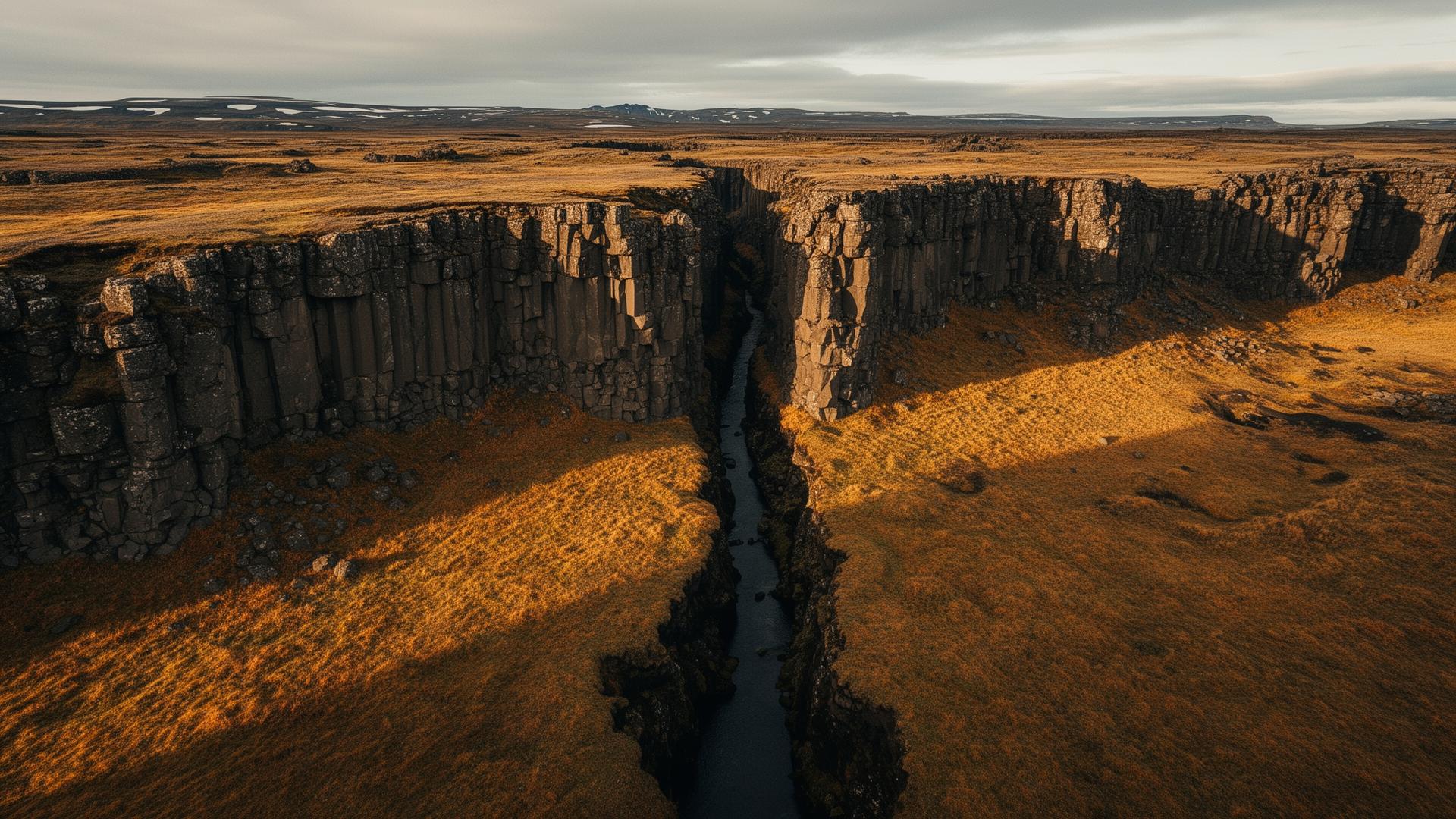
Aerial view of the Þingvellir rift valley, Iceland
Plate IÞingvellir, where two continents drift apart.
IGeology

A country still being written

Iceland is one of the youngest landscapes on Earth, a country drafted, edited and re-edited by fire and ice over the last 16 million years.

It sits where two tectonic plates, the North American and Eurasian, are pulling apart along the Mid‑Atlantic Ridge. Magma rises into the gap and freezes into new ground. The island grows by roughly two centimetres each year, a country quietly stretching out for a yawn.

At Þingvellir National Park you can walk down into the rift valley itself, with continents on either side. It is also the place where, in 930 AD, Vikings founded one of the oldest parliaments in the world.

"Iceland is the rare place on Earth where you can stand on a tectonic plate boundary above sea level."
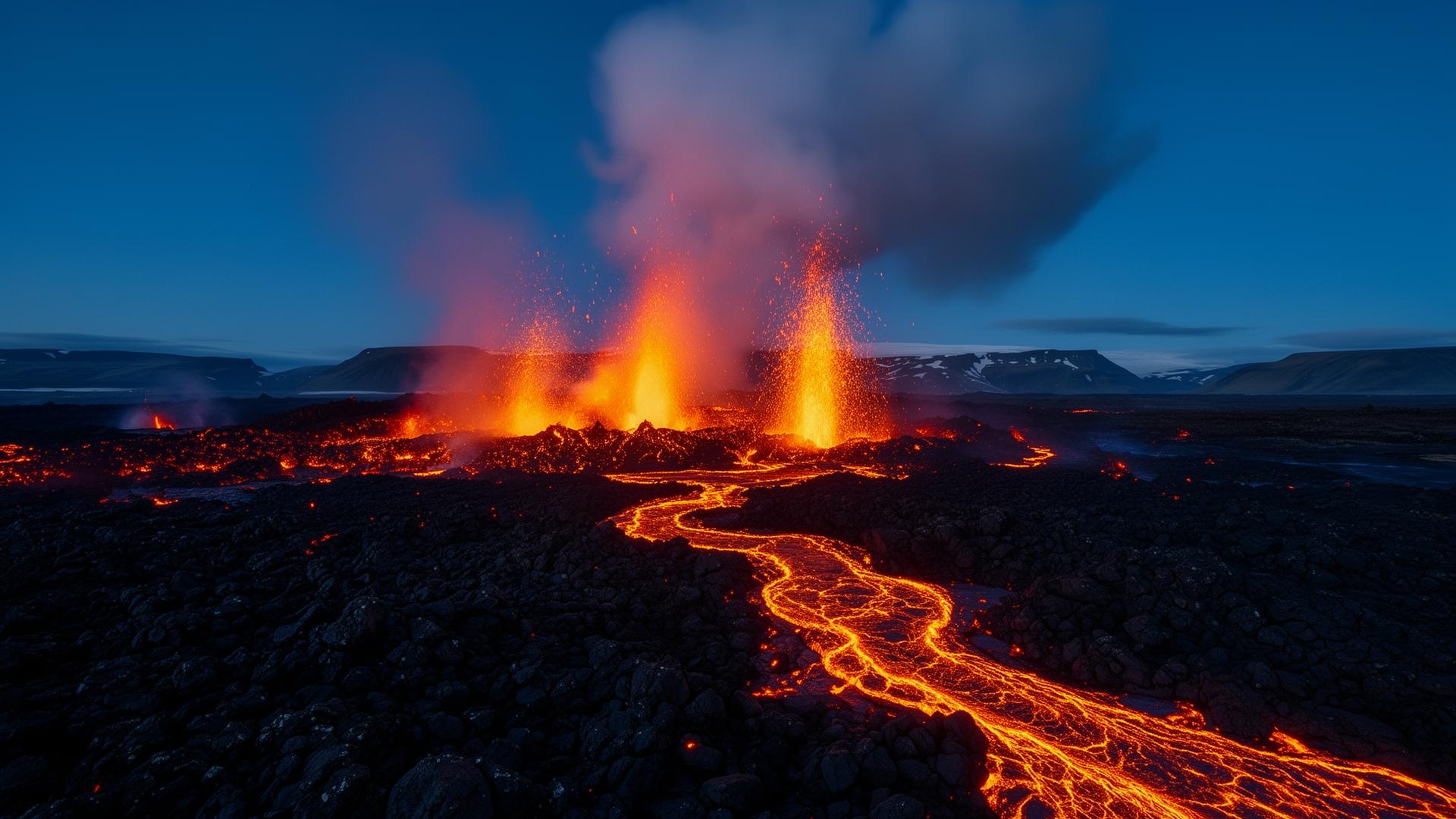
Glowing lava fountains and rivers at night, Iceland
Plate IIA fissure eruption on the Reykjanes peninsula.
IIFire

Roughly 130 volcanoes, give or take

About thirty are still active. On average, somewhere on the island erupts every four to five years.

Because Iceland straddles a tectonic rift and sits on a deep mantle plume, magma has an unusually short journey to the surface. Eruptions here are often gentle, long fissures opening up, fountains of incandescent rock, slow rivers of lava carving new shapes into the land.

Recent activity on the Reykjanes peninsula has drawn travellers from across the world to watch fresh lava paint the night orange. The lava cools into the black basalt fields and sea cliffs that define so much of the country's character.

"Eyjafjallajökull's 2010 eruption grounded over 100,000 flights, and taught the world a new word."

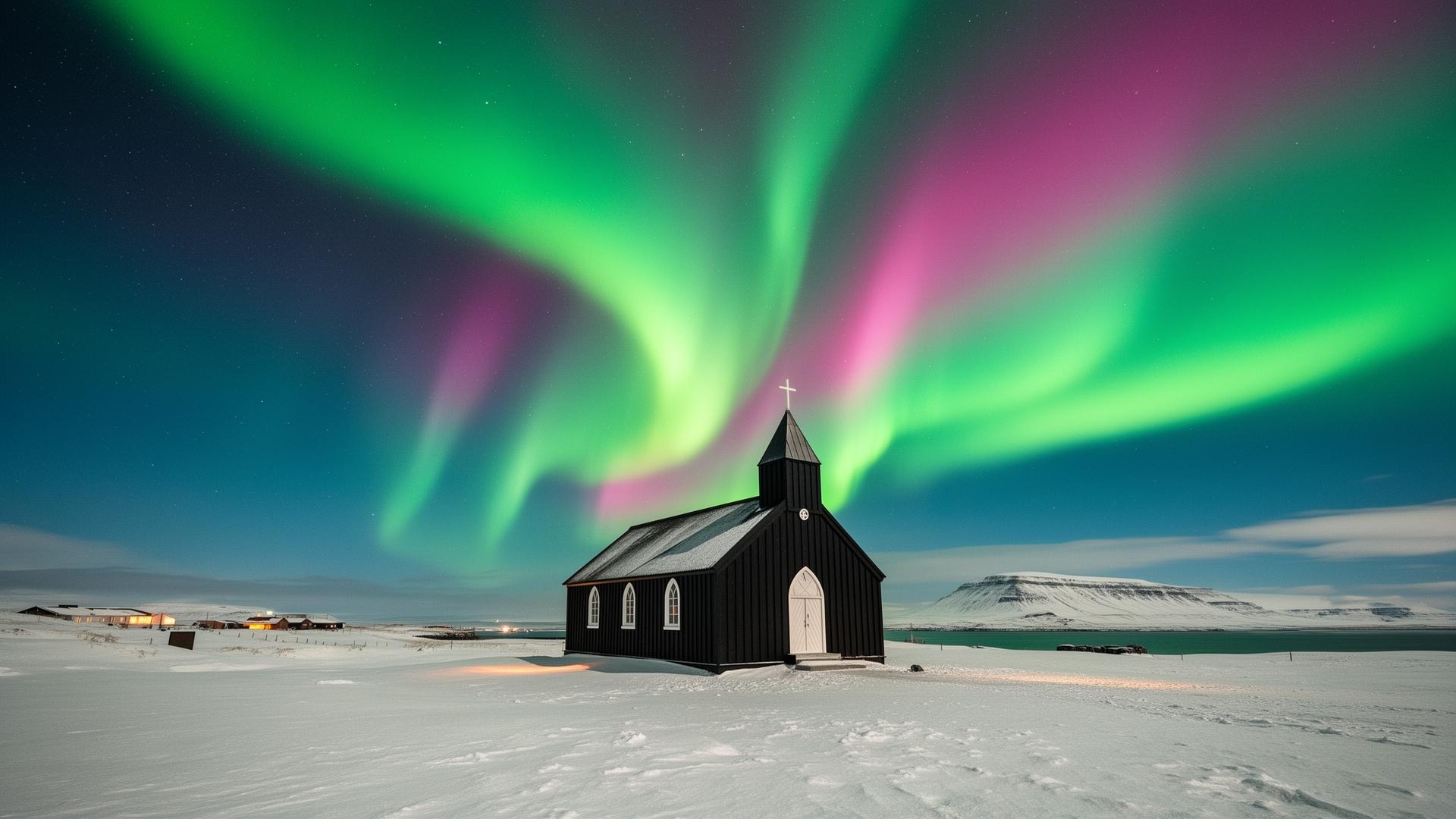
Northern lights swirling above a small black church in Iceland
Plate IIIAurora over Búðakirkja, Snæfellsnes peninsula.
IIILight

Why the sky dances

The aurora borealis begins 150 million kilometres away, on the surface of the Sun.

Solar storms send streams of charged particles racing into space. Earth's magnetic field funnels them toward the poles, where they collide with oxygen and nitrogen high in the atmosphere. Oxygen glows green and crimson; nitrogen burns blue and violet.

Iceland sits directly beneath the auroral oval, which is why the displays here can be so generous. The lights are happening year‑round, but only visible when the sky is dark and clear, between late September and early April.

"The aurora is always there. Summer simply hides it behind the light."

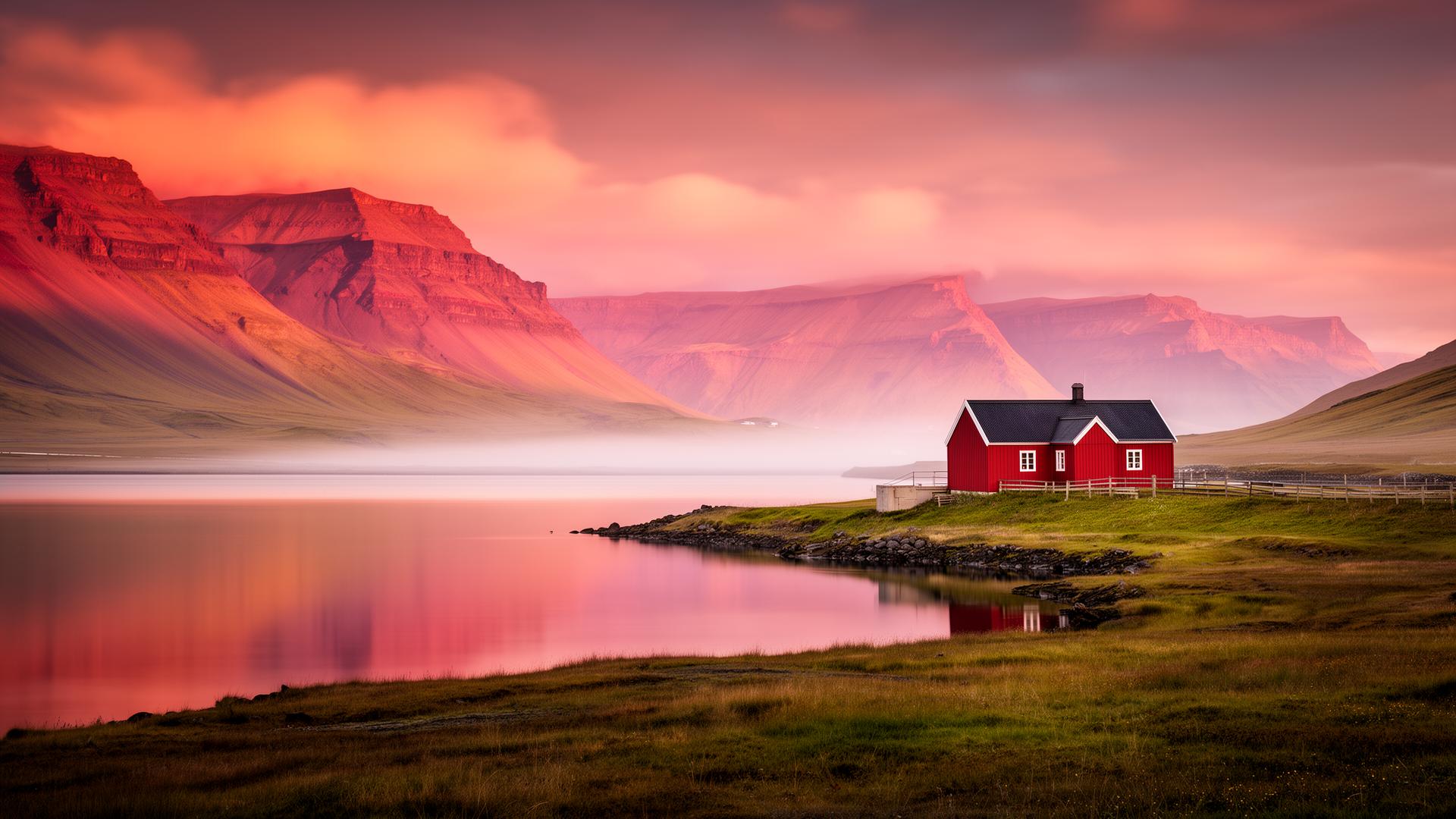
Red farmhouse beside a calm fjord at midnight, Iceland
Plate IV1 a.m. in late June, somewhere on the Westfjords.
IVTime

The summer night that never quite arrives

Around the solstice, Reykjavík sees about twenty‑one hours of daylight. The remaining hours are a long, golden twilight.

Iceland sits just south of the Arctic Circle. Earth's axial tilt swings the northern hemisphere toward the Sun in summer, so up here the Sun barely sets at all. Further north, it doesn't set for weeks.

The flip side: in mid‑December, daylight shrinks to four or five hours, which is exactly why Icelanders developed an entire culture of cosy cafés, candles, hot pots and slow weekends.

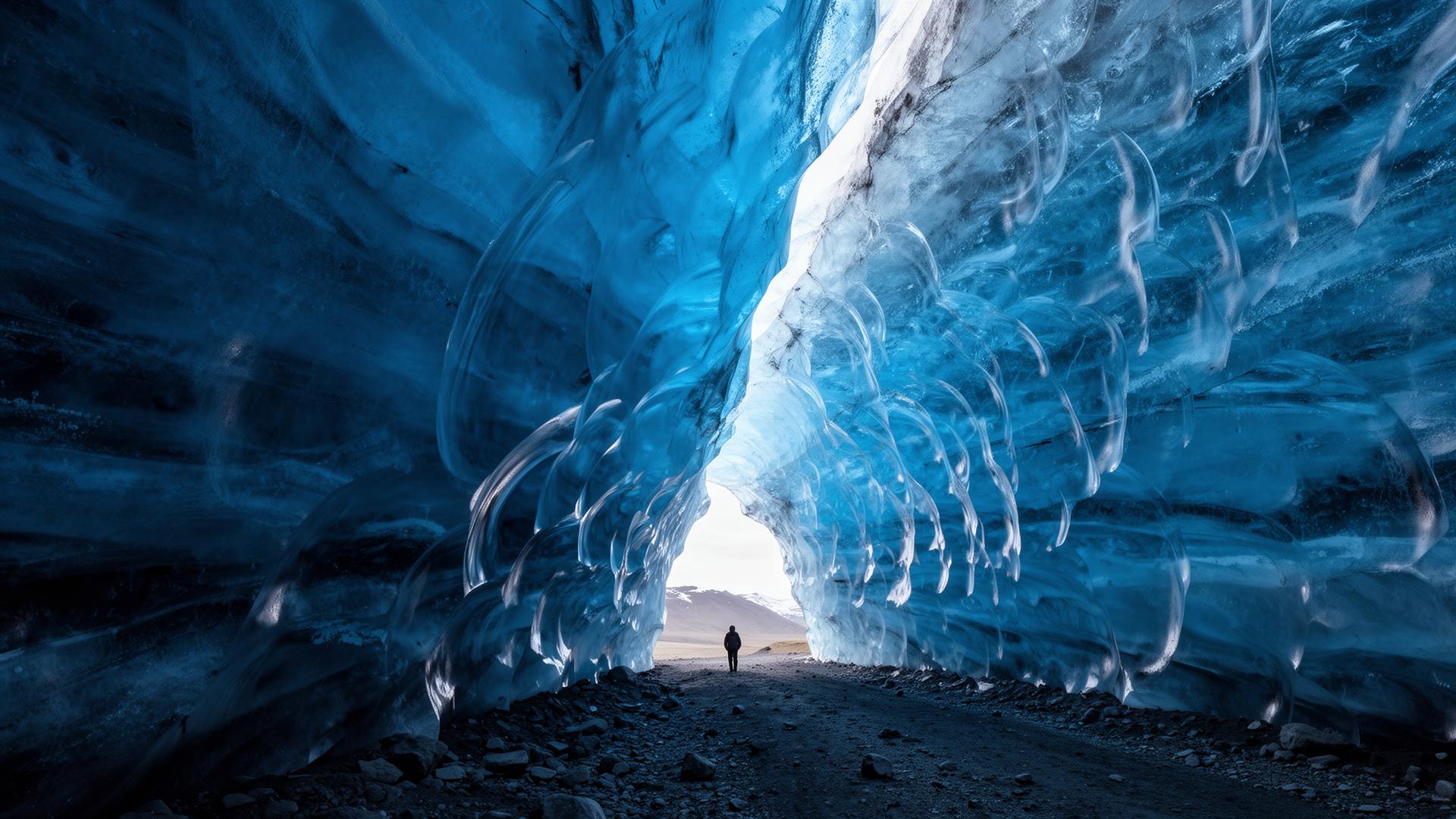
Interior of a blue glacial ice cave, Iceland
Plate VInside an ice cave beneath Vatnajökull.
VIce

Slow, blue rivers of ancient water

About eleven percent of the island is covered in glaciers. The largest, Vatnajökull, is bigger than every lava field in Iceland combined.

Glaciers form when snow falls year after year and never fully melts. Layers compact under their own weight into dense, blue ice that flows downhill in extreme slow motion, a frozen river measured in centuries.

Beneath several glaciers sleep active volcanoes. When ice meets sea, it breaks off into icebergs that drift through Jökulsárlón lagoon and wash up on the Diamond Beach, sparkling on black sand.

"Glacier ice is blue because it is so dense. It absorbs every colour of light except blue."

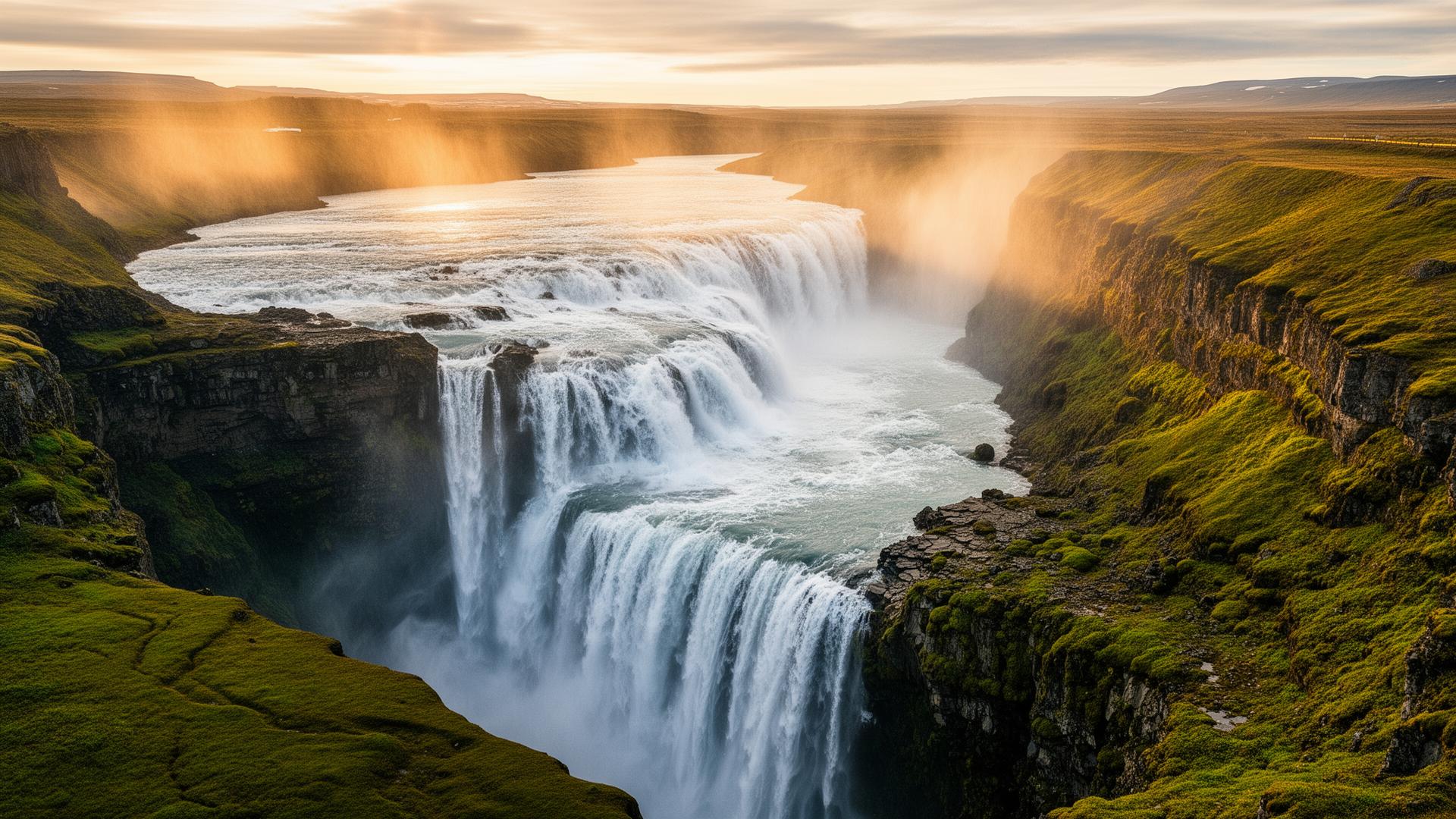
Gullfoss waterfall in golden afternoon light, Iceland
Plate VIGullfoss, the golden waterfall on the Hvítá river.
VIOn the ground

What to actually do here

A short, opinionated list, the kind a local would write you on the back of a napkin.

Drive the Golden Circle in a single unhurried day: Þingvellir, Geysir and Gullfoss. Soak in a geothermal lagoon, the Blue Lagoon, Sky Lagoon, or a quiet country hot pot under the stars.

In summer, watch puffins on the Westman Islands and walk on a glacier. In winter, chase the aurora and step inside an ice cave. Year‑round: snorkel between continents at Silfra, eat skyr for breakfast, and end every day with a cinnamon snúður.

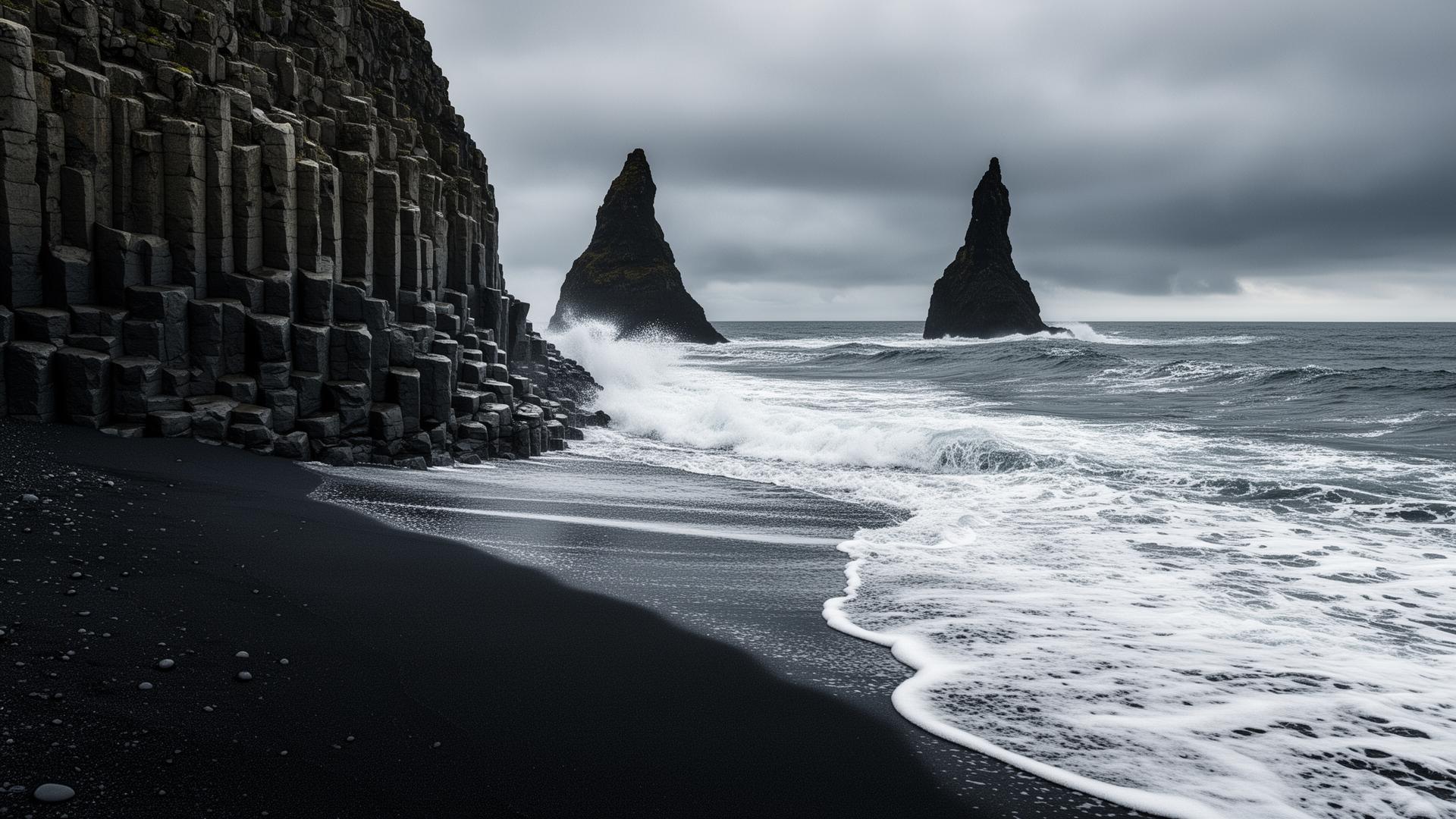
Black sand beach with basalt columns and sea stacks, Iceland
Plate VIIReynisfjara beach and the Reynisdrangar sea stacks.
VIIEdges

Where lava meets the Atlantic

The Icelandic coastline is an argument between three forces: lava, ice and ocean.

Beaches like Reynisfjara are jet black because they are made of pulverised basalt, cooled lava, ground down by the relentless North Atlantic. Offshore, the sea stacks Reynisdrangar rise like dark fingers; legend says they are trolls caught by the morning sun.

Lava that cools slowly cracks into perfect hexagonal columns, at Svartifoss, at Stuðlagil canyon, and along the cliffs at Reynisfjara. They look man‑made, but it is only physics, working slowly and beautifully.

"Roughly sixty percent of the world's Atlantic puffins breed on these cliffs."

Appendix

Six small things,
worth knowing.

01

Iceland's tap water is glacier meltwater, among the cleanest on Earth.

02

Almost 100% of electricity comes from hydro and geothermal sources.

03

There are no mosquitoes. None. Anywhere.

04

Most Icelanders use patronymics: Jónsdóttir means 'Jón's daughter.'

05

The language has barely changed in 1,000 years, children read the Viking sagas.

06

There are more sheep than people, and roughly as many hot tubs as petrol stations.

Colophon

Reading about a place is one thing.
Standing in it is another.

End of guide · Bless bless